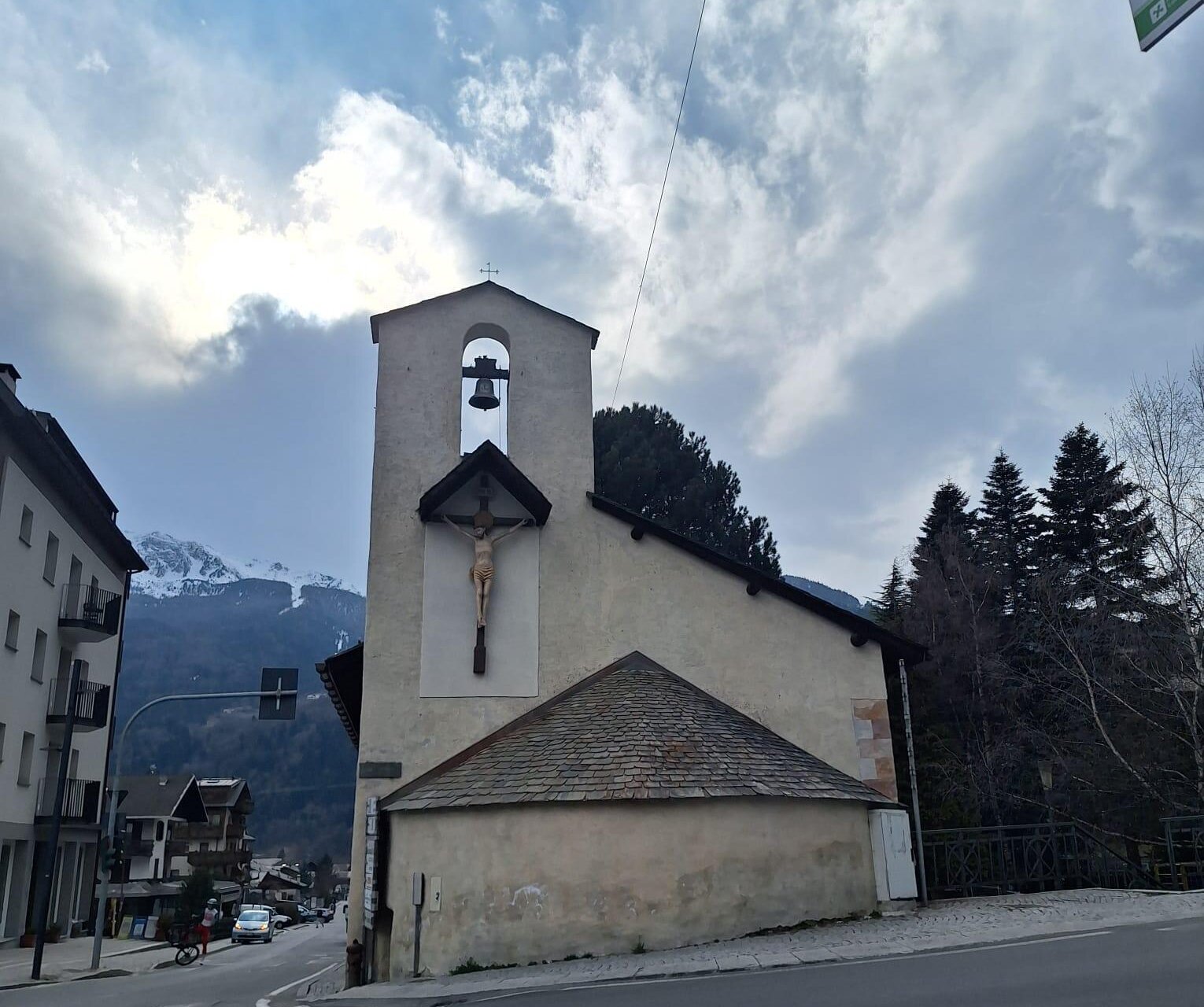
Situated in the Buglio district of the Church of S. Barbara, the date and reason for its construction are well known: in 1511, it was built to invoke protection from an epidemic that was pressing from the nearby Tyrol.
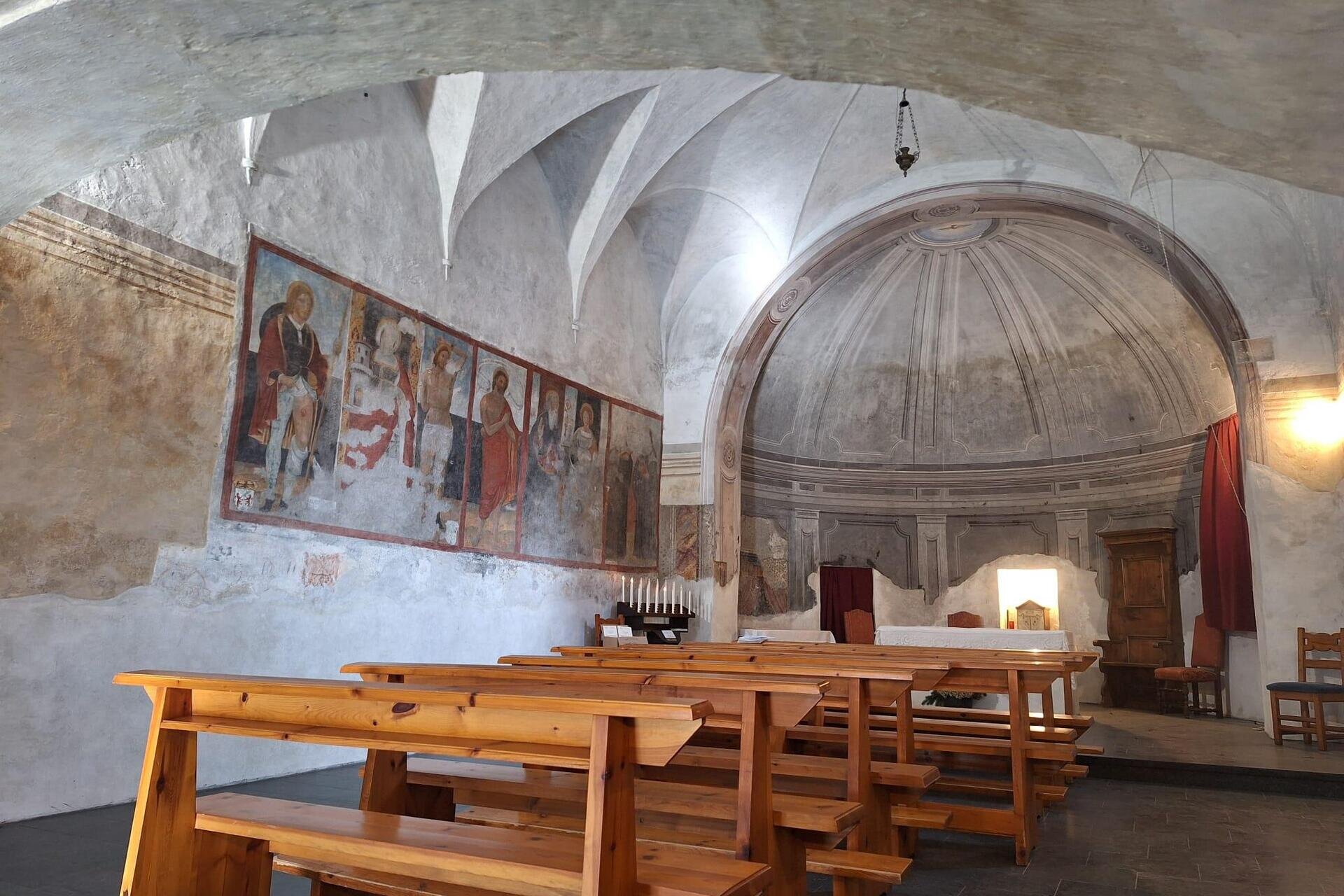
The building features a single nave, but there is no reliable information regarding the interior paintings that were commissioned in 1522 from a certain Bartolomeo pictori de Grosio. The church remained active until the early nineteenth century. In 1821, according to Napoleonic health regulations, a cemetery was built next to the church, which maintained its function for exactly one hundred years, until 1921, when it was deconsecrated and demolished.
On the wall of the building remains, as a reminder of the presence of the cemetery, a serpentine slab depicting a skull with two crossed bones and an inscription that recalls the necessity of making alms for the deceased.
Recently restored thanks to a fundraising effort, it is currently open to visitors.
 Visit the website
 +39 328 2272651
 parrocchia.bormio@gmail.com

