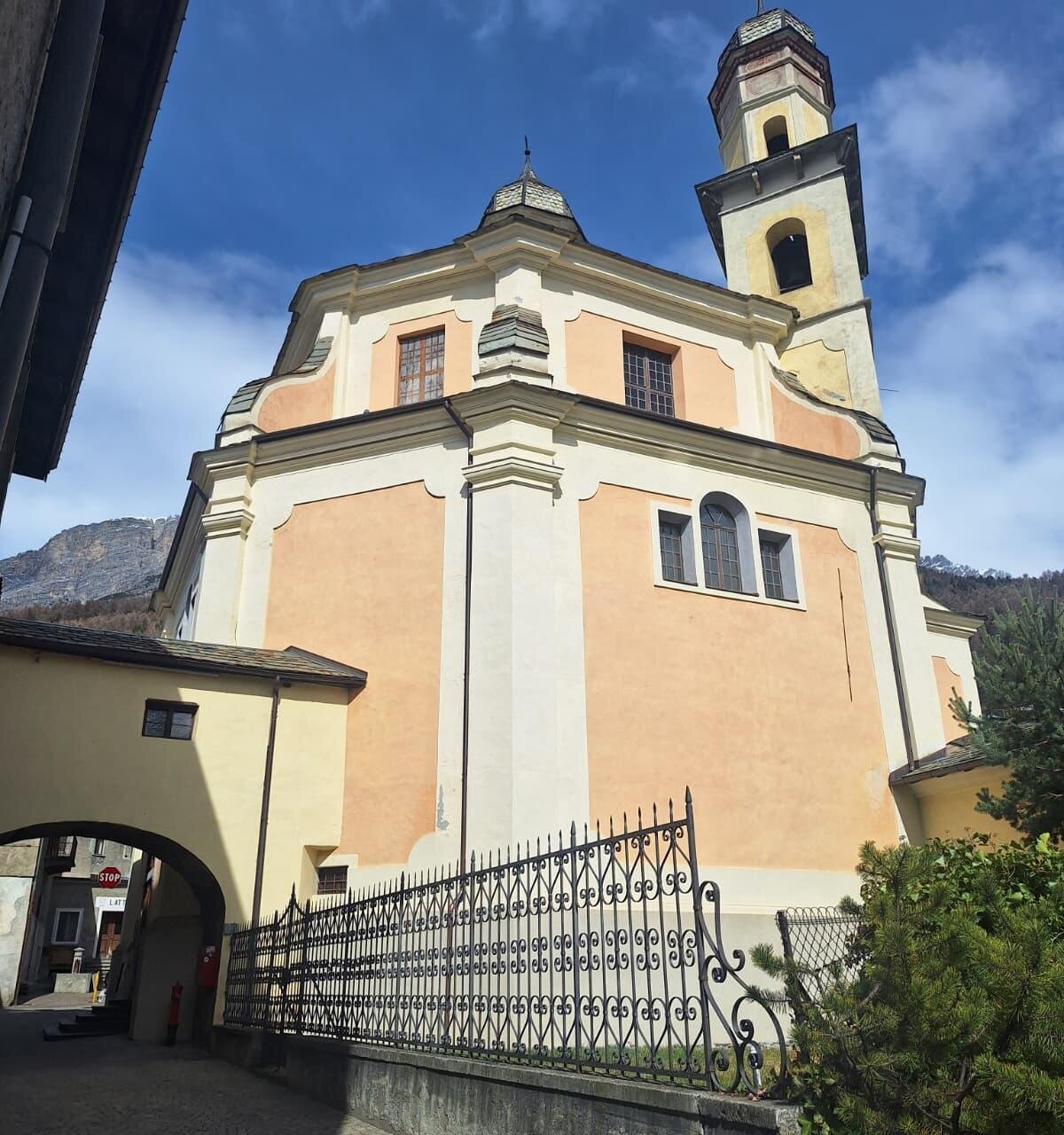
The building represents the first example of Baroque architecture in the country and the construction works began in 1635 at the behest of the Jesuits.
Exterior
The structure has an octagonal plan and a single hall and features a belfry, with a square base, that ends with an octagonal lantern topped with a bulbous spire.
Interior
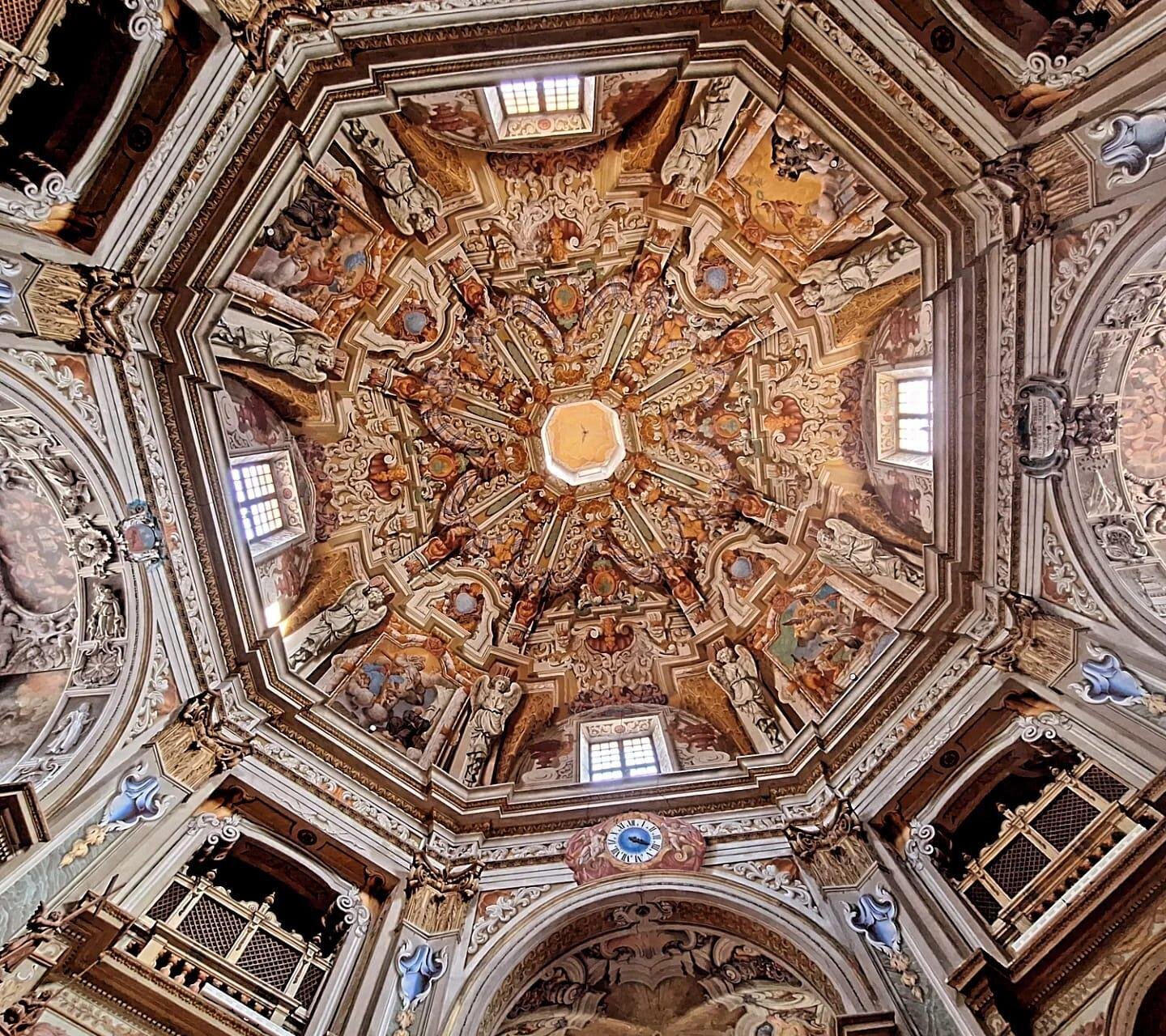
What certainly attracts attention is the imposing dome, frescoed in 1692-93 by Giovanbattista Muttoni using the painting technique of trompe l’oeil (literally “fool the eye”). At the top part of the lantern, there is a depiction of the descent of the Holy Spirit and, separated by caryatids in the form of angels, several scenes from the lives of the Jesuits.
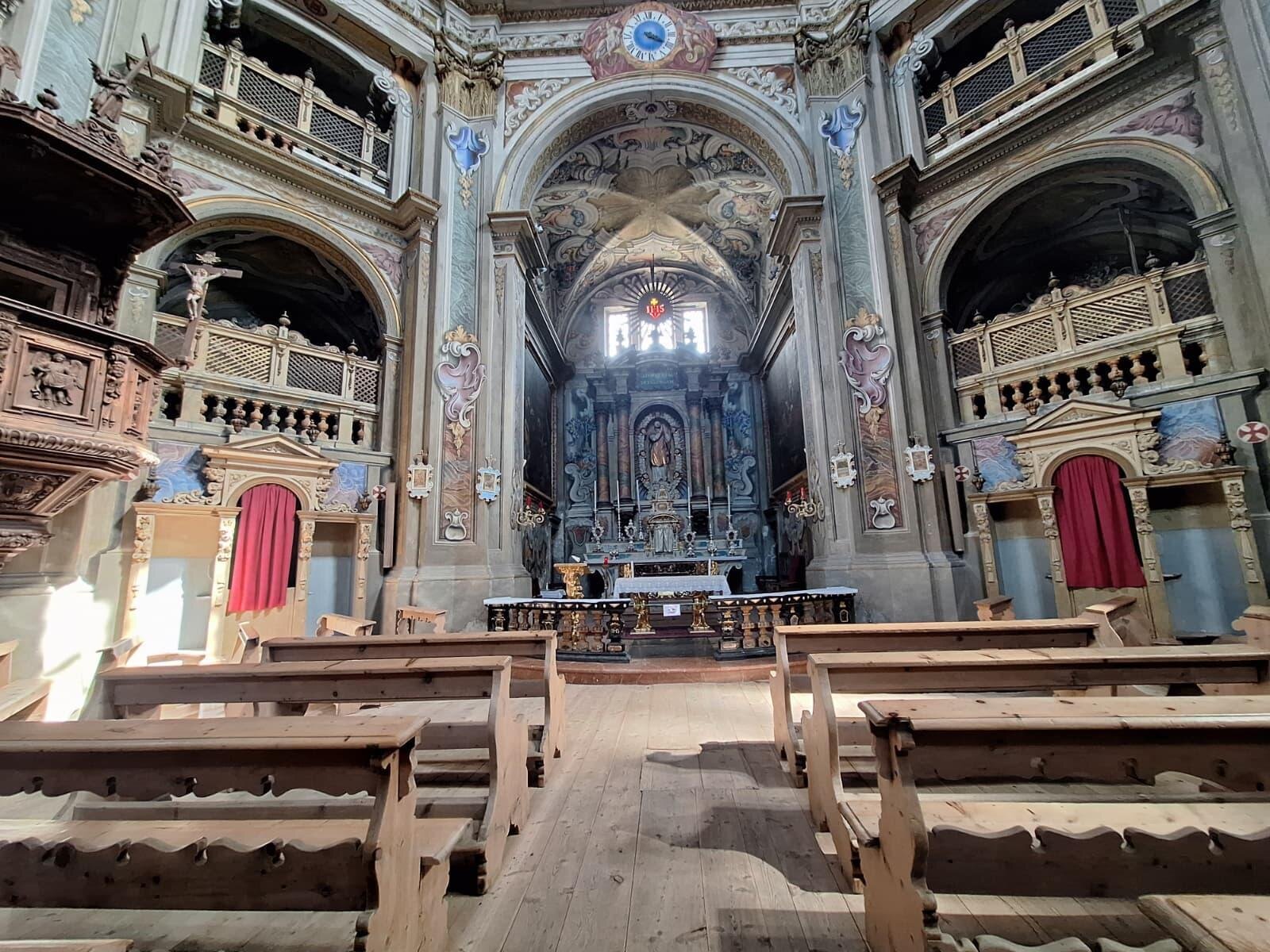
Also by Muttoni are the two paintings in the presbytery, on either side of the wooden statue of St. Ignatius, depicting the Death of the saint patron and the Presentation of the rules of the Society of Jesus to the Pope.
In the right side chapel, dedicated to St. Francis Xavier, the coat of arms of the noble Nesini family, who had it decorated, appears.
Particularly majestic are the altar, richly decorated, and the side stuccoes.
The wooden structure of the altar is rich in natural elements. On either side of the columns are allegorical symbols and representations of the Passion, and at the peak, the statue of the Sorrowful Virgin flanked by Saints John and Mary Magdalene with cherubs and putti. The altar houses the panel of St. Francis Xavier before the crucifix, painted by Father Ulderico.
The left side chapel is instead dedicated to the Virgin Mary and was commissioned and decorated by the women’s congregation of Bormio. The exquisite wooden altar is dedicated to the Virgin with Child between Saints Stanislaus Kostka and Louis Gonzaga.
The side walls are frescoed with images of Jesuit saints. The church is rich in loggias used by the students of the College who, through an internal passage from Palazzo Alberti, could reach the church directly. The main altar appears understated compared to the two side altars because it was placed provisionally and was never completed. Noteworthy is the pulpit which, in the marble balustrade, features the Veil of Veronica with the face of Jesus imprinted on it, flanked by angels and symbols of the Passion. Under the presbytery of the church, closed to the public, are the tombs of the Fathers and Brothers of the Jesuit college.
 Visit the website
 +39 328 2272651
 parrocchia.bormio@gmail.com

